
Power amplifiers
Broadband and jamming amplifiers
Multi-octave broadband amplifiers and band-specific jamming amplifier modules for electronic warfare, counter-UAS and defense communication systems. Standard models start at 20 MHz, and the jamming series covers the GNSS, ISM and cellular bands.
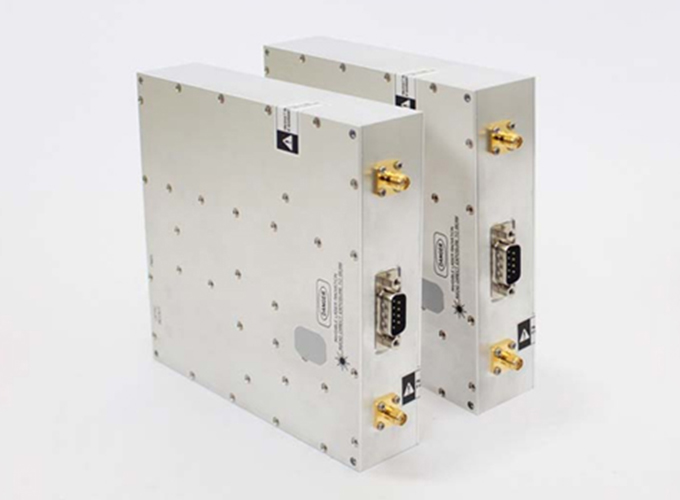
Key features
- Multi-octave bandwidth
- Isolator-protected output
- Wide output power range
- Wide operating temperature range
- Compact, rugged housing
- Field-proven reliability
- Standard options available
- Custom bands and power levels
Standard models
Click a row to select it for a quote| Select | Datasheet | ||||||
|---|---|---|---|---|---|---|---|
| EBM-0020M0500-50-53 | 20 | 50 | 50 | 53 | 187 × 91 × 28 | ||
| EJM-0433-49-48 | 433 | 435 | 49 | 48 | 180 × 115 × 28 | ||
| EBM-0500M1000-47-46 | 500 | 1000 | 47 | 30 | 180 × 90 × 28 | ||
| EBM-0500M1000-50-53 | 500 | 1000 | 50 | 53 | 187 × 91 × 28 | ||
| EBM-0500M2500-47-50 | 500 | 2500 | 47 | 50 | 187 × 91 × 28 | ||
| EBM-0850M1650-50-46 | 850 | 1650 | 50 | 56 | 270 × 130 × 28 | ||
| EJM-0902-49-48 | 902 | 928 | 49 | 48 | 180 × 115 × 28 | ||
| EBM-1000M2000-47-46 | 1000 | 2000 | 47 | 30 | 180 × 90 × 28 | ||
| EJM-1164-49-48 | 1164 | 1300 | 49 | 48 | 180 × 115 × 28 | ||
| EJM-1164-57-46 | 1164 | 1300 | 500 | 60 | 280 × 200 × 28 | ||
| EJM-1559-49-48 | 1559 | 1610 | 49 | 48 | 180 × 115 × 28 | ||
| EJM-1559-57-46 | 1559 | 1610 | 500 | 60 | 280 × 200 × 28 | ||
| EBM-2000M4000-47-46 | 2000 | 4000 | 47 | 30 | 180 × 90 × 28 | ||
| EBM-2200M2700-50-46 | 2200 | 2700 | 50 | 56 | 270 × 130 × 28 | ||
| EJM-2400-49-48 | 2400 | 2484 | 49 | 48 | 180 × 115 × 28 | ||
| EBM-2500M6000-45-48 | 2500 | 6000 | 45 | 48 | 187 × 91 × 28 | ||
| EJM-3300-53-53 | 3300 | 3800 | 53 | 53 | 250 × 180 × 32 | ||
| EBM-4000M6000-47-46 | 4000 | 6000 | 47 | 30 | 180 × 90 × 28 | ||
| EBM-5000M6000-47-46 | 5000 | 6000 | 47 | 53 | 248 × 130 × 28 | ||
| EBM-5000M6000-49-46 | 5000 | 6000 | 49 | 55 | 330 × 180 × 28 | ||
| EJM-5650-48-48 | 5650 | 5850 | 48 | 48 | 180 × 115 × 28 | ||
| No standard model matches these values. Try a wider range, or send a spec request. | |||||||
Output power and gain are typical values. See each datasheet for full specifications, connectors and power supply.
Broadband modules (EBM series)
A broadband amplifier covers a wide span with one unit, for example 500 MHz to 1 GHz or 2 GHz to 6 GHz. This suits wideband jammers, communication links that hop over a large range and test benches that should not need a different amplifier for every band. The trade-off is that gain flatness and efficiency are specified over the whole span, so check both in the datasheet.
Jamming modules (EJM series)
Jamming modules concentrate power in one target band, such as GNSS L1 at 1559 to 1610 MHz, GNSS L2/L5 at 1164 to 1300 MHz or the 2.4 GHz and 5.8 GHz ISM bands used by drone links. Several modules are normally combined in one system, each driven by its own signal source. The isolator-protected output tolerates antennas with a poor match.
Operating jamming equipment is restricted by law in most countries. The buyer is responsible for the authorization required for the end use.
Applications
Frequently asked questions
Should I use one broadband amplifier or several band-specific modules?
One broadband unit is simpler to integrate and covers gaps between bands. Band-specific modules give more output power and better efficiency in each band for the same size and supply current. Systems that only need to cover a known set of bands usually use band-specific modules.
Which semiconductor technology is used?
GaN is used where wide bandwidth, high frequency or high power density is needed. LDMOS is used at lower frequencies where it gives good ruggedness and cost for the power level. The technology for each model is selected for its band and output.
Do the modules include the signal source?
No. The amplifiers take an RF input from your exciter or signal generator. If you need a complete CW source for the 3.5 GHz band, see the RF signal generator.
Need a band or power level not listed?
Send the frequency, output power and gain you need. An RF engineer reviews it and replies with a datasheet proposal.