RF power amplifiers and fiber optic products, designed and manufactured in Korea

Request a Quote

Fiber optic

Fiber optic components

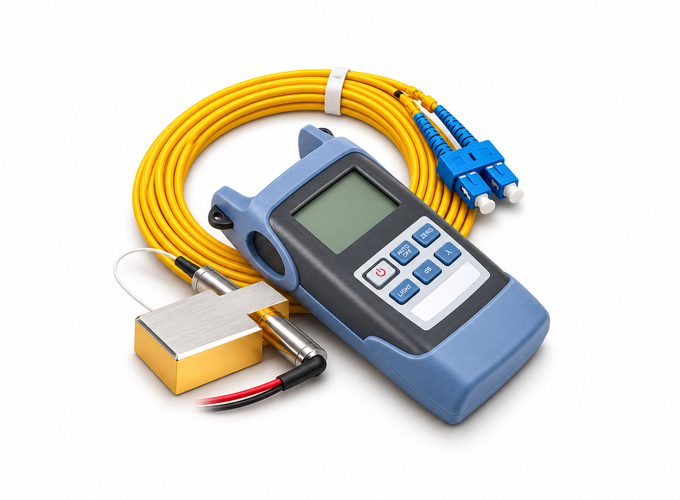
Passive components and instruments for the fiber plant around a repeater or access network: optical switches for route redundancy, PLC splitters, optical attenuators, jumper cords and a portable optical power meter.

Fiber optic components

Key features

  • Optical switches for redundancy
  • PLC splitters, 2 to 64 channels
  • Variable and fixed optical attenuators
  • Jumper cords, ITU-T G.652D and G.657
  • Portable optical power meter
  • Low insertion loss
  • Telcordia GR-1209 and GR-1221 compliant switch
  • Various connector types

Products

Optical switch

Optical switch

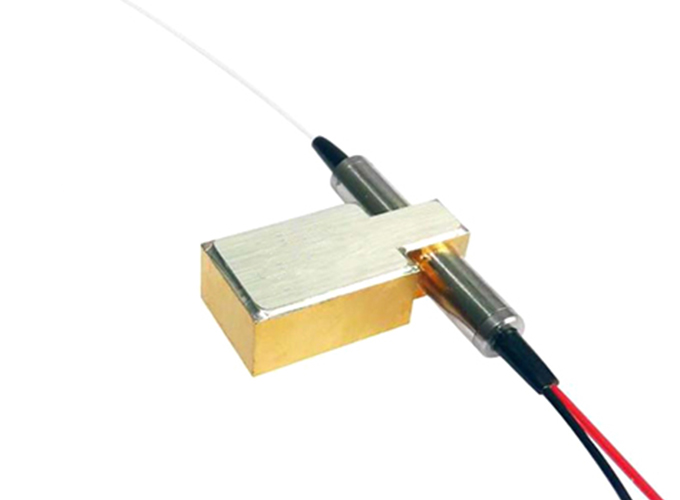
Switches the optical path for route control and redundancy. The optical path is epoxy-free, and the switch complies with Telcordia GR-1209-CORE and GR-1221-CORE.

Key features

  • Redundancy switching for OEM or field use
  • High isolation and low insertion loss
  • High stability and reliability
  • Telcordia GR-1209-CORE and GR-1221-CORE compliant
  • Epoxy-free optical path

Applications

  • Fiber optic repeater systems
  • Long-haul and metro networks
  • Instrumentation resource sharing
  • Military communications
PLC splitter

PLC splitter

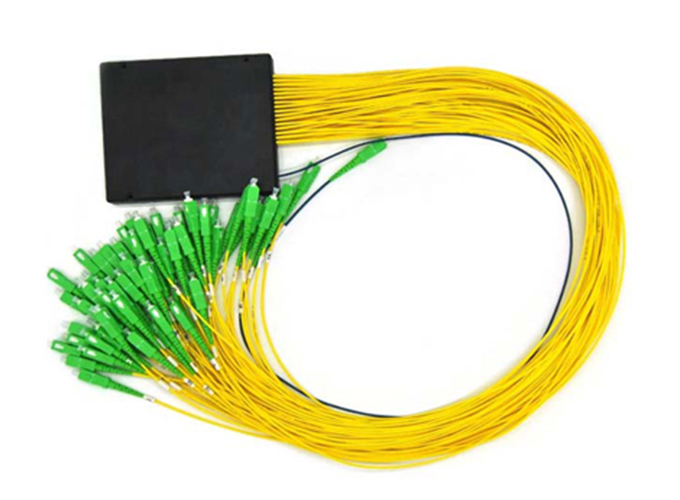
A passive splitter that divides optical power evenly between fibers, with flat response over a wide wavelength range. Supplied in a stainless steel tube with single-mode pigtails.

Key features

  • 2, 4, 8, 16, 32 and 64 channel versions
  • Low insertion loss and low polarization-dependent loss
  • Flat wavelength response
  • Single-mode pigtails, compact package
  • Stainless steel tube housing
  • Wide operating wavelength range

Applications

  • Telecommunication networks
  • FTTH, FTTB, FTTC and CATV systems
  • PON (passive optical network) systems
  • Test equipment
Variable optical attenuator

Variable optical attenuator

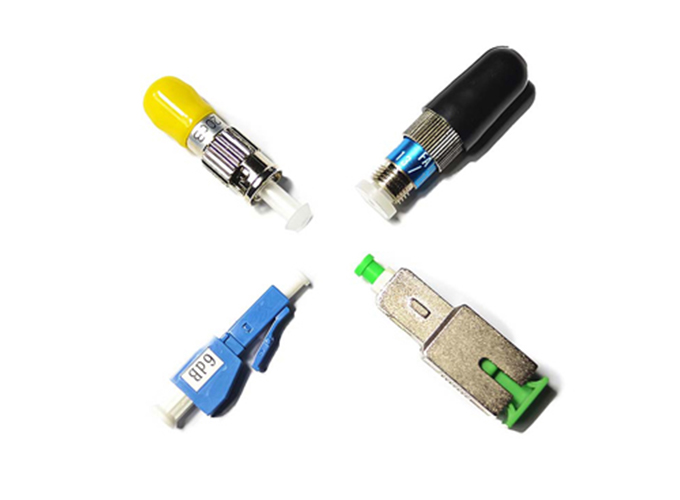
Sets the optical power level in a fiber link for equalization and calibration. Fixed attenuation values are also available.

Key features

  • Variable and fixed attenuation versions
  • Wide attenuation range, low loss
  • Low polarization dependence
  • Flat spectral response with very low ripple
  • High precision, compact size

Applications

  • Power control and balancing in DWDM and CWDM systems
  • Signal levelling in test and measurement setups
  • Power management in fiber optic links
  • System calibration
Optical jumper cord

Optical jumper cord

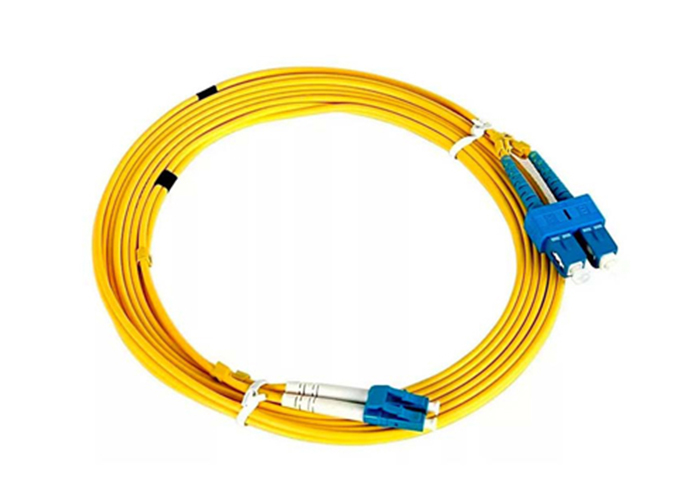
Fiber patch cords for low-loss connections between equipment, compliant with ITU-T G.652D and G.657 and available with the common connector types.

Key features

  • High return loss and low insertion loss
  • ITU-T G.652D and G.657 compliant
  • Telcordia-style boots
  • Various connector types

Applications

  • Fiber optic transmission systems
  • Data centers and network interconnections
  • FTTH and FTTB installations
  • Optical test and measurement setups
Optical power meter

Optical power meter

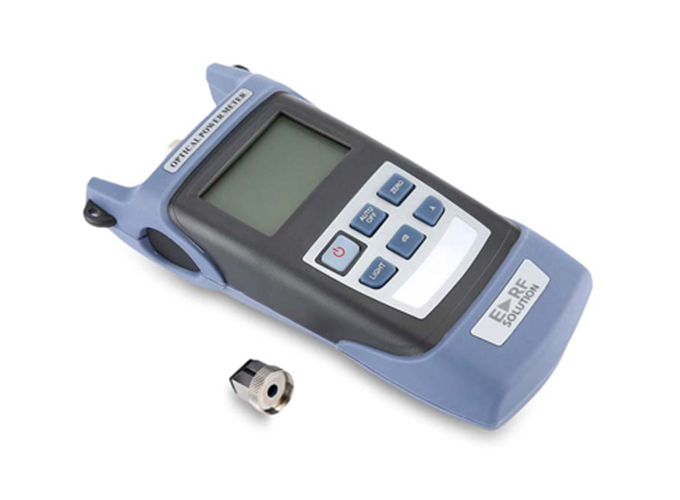
A portable meter for optical signal power that is used in the same way as an RF power meter. It stores measured data and runs on a rechargeable battery.

Key features

  • Operates like an RF power meter
  • Compact and lightweight
  • Link budget measurement
  • Rechargeable, fully portable
  • Stores measured data
  • MUX/DEMUX and SFP transceiver tests

Applications

  • Link budget measurement and verification
  • MUX/DEMUX and SFP transceiver testing
  • Installation and maintenance of fiber systems
  • Laboratory and field power calibration

Where these parts are used

A fiber-fed repeater or access network needs more than transmitters and receivers. Splitters divide the signal from one master unit between several remote units, attenuators balance the optical power so that every receiver works inside its range, and switches move traffic to a second route when a fiber is cut.

Jumper cords make the connections inside the rack, and the power meter is used during installation and maintenance to check that each link is within its loss budget.

Applications

Frequently asked questions

What does a PLC splitter do?

A PLC (planar lightwave circuit) splitter divides the light from one fiber evenly between several output fibers. A 1 × 8 splitter, for example, feeds eight remote units or subscribers from one source, with about 9 dB of splitting loss plus a small excess loss on each output.

When is an optical attenuator needed?

When the optical power at a receiver is higher than its input range, typically on short links, or when several links must be set to the same level. A fixed attenuator is used when the value is known, a variable one when it has to be adjusted on site.

Need a band or power level not listed?

Send the frequency, output power and gain you need. An RF engineer reviews it and replies with a datasheet proposal.